Tagline: Before time began, so did the stereotypes.
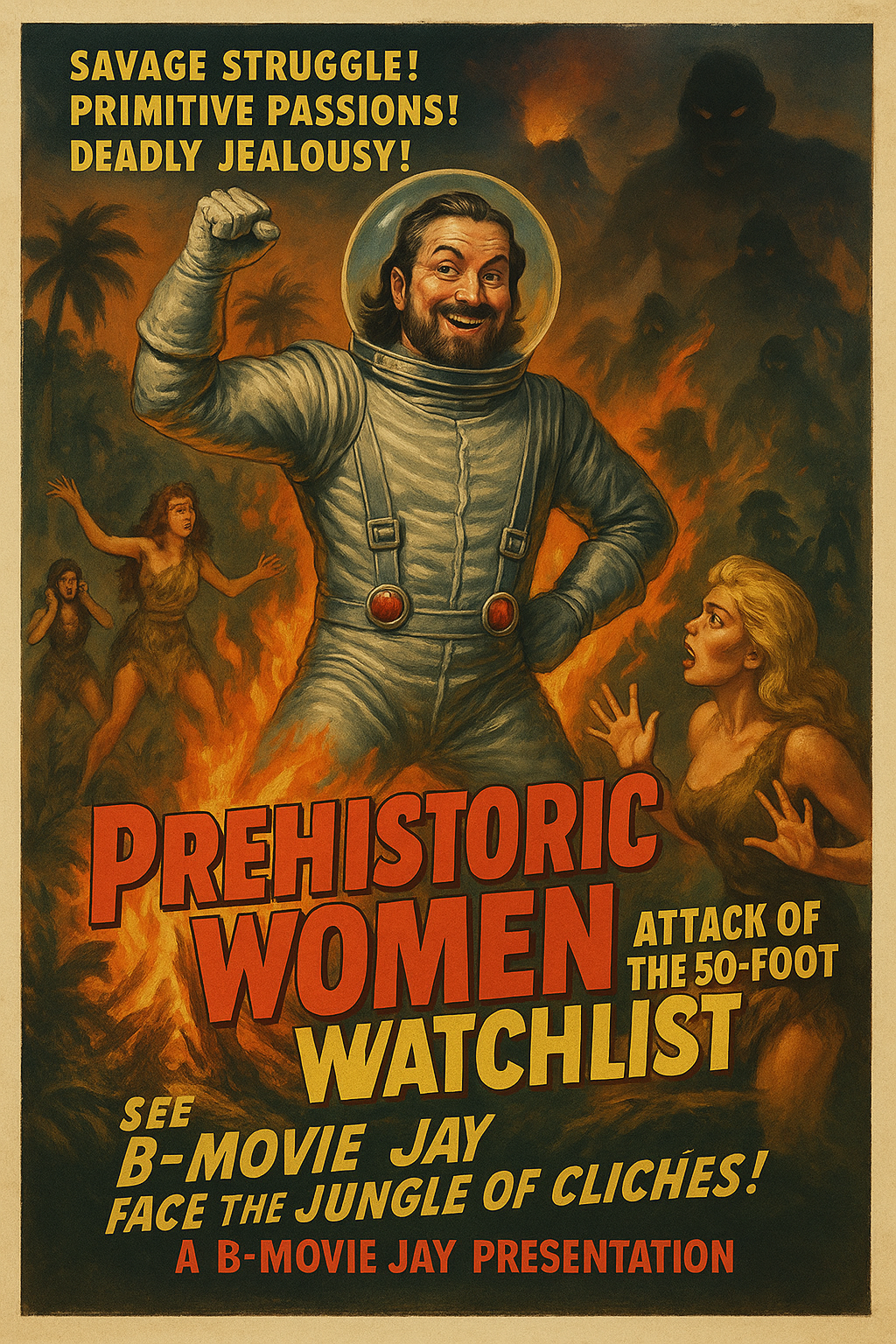
Why I Watched It
I try to give every movie from the 1950s sci-fi era a fair shake, even when they stretch the definition of the genre. Prehistoric Women is not traditional science fiction as we define it now, but it was an important companion to sci-fi films of the time and often seen by movie goers as the same kind of fantasy adventure. Prehistoric Women is more of a narrated reenactment of early humanity filtered through 1950s imagination rather than rocket ships and radioactive creatures. That alone makes it worth a look.
The film promises a look into primitive humanity but what it really offers is a time capsule of how mid-century America imagined it. It is less about evolution and more about the cultural assumptions of the people making it.
Genre Note: While not true science fiction, Prehistoric Women was often grouped with 1950s sci-fi features and marketed to the same audiences. It captures the same spirit of speculative adventure that defined the decade, even if the “science” part never shows up.
Plot in 60 Seconds
It opens with a moonlit dance where the narrator explains that the women are compelled to move by an unconscious longing for men, setting the tone for ninety minutes of prehistoric gender politics. Fifteen years earlier Tigri’s mother led a quiet revolt within their own tribe after being ordered to carry the men’s latest kill, bonking the chief with a rock and escaping into the jungle with the tribe’s daughters.
Under the guidance of The Wise One, the lone elder who remembers men but never thinks to mention them, the girls grow up to form an all-female tribe that somehow forgets men exist at all. When a hunting party of men stumbles into their valley, everyone reacts like they have just discovered a new species. What follows is a blur of fighting, kidnapping, and confused romance that could have been avoided if anyone had simply talked.
Eventually the men and women unite to fight Guadi, the lonely cave giant who kills Tigri’s mother and meets his fiery end after someone lights a torch and shoves it into his crotch. With the giant gone, harmony is restored, everyone pairs off, and the women resume their moon dance while the narrator declares that the eternal battle between the sexes has finally been solved by romance.
The Watch Experience
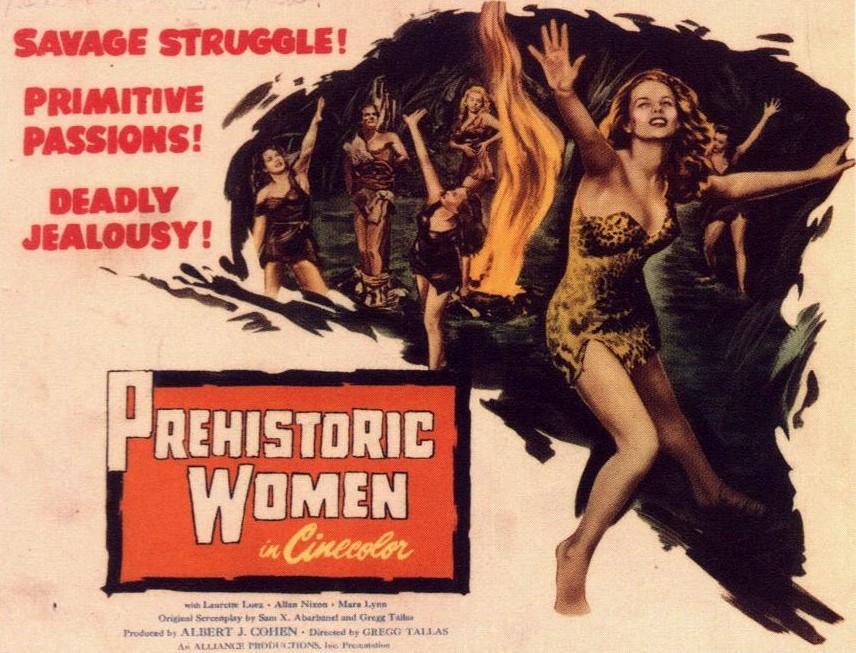
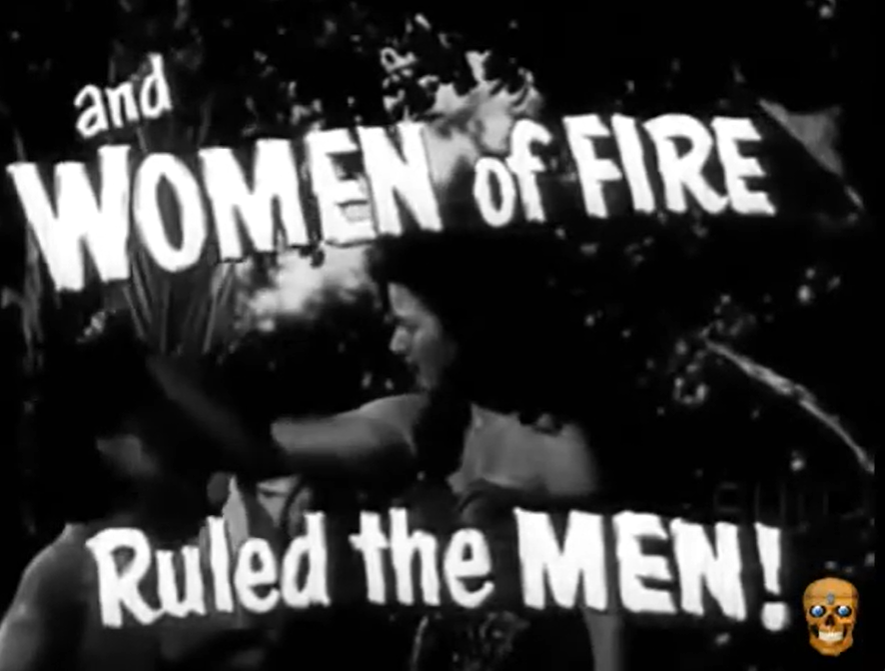
Watching Prehistoric Women feels like sitting through an old classroom filmstrip that forgot it was supposed to end. The entire story unfolds in one location, surrounded by cardboard rocks and a narrator who treats every movement like breaking news. The lack of dialogue gives it a strange, almost trance-like rhythm. You begin to notice the details that were never meant to stand out, like props wobbling or the same background rock making three separate cameos.
Then comes the “flying dragon” scene, a moment of pure 1950s magic, when the promised prehistoric terror reveals itself as a very determined pelican. It flaps, it squawks, it strikes fear in no one. Yet somehow, it is one of the most entertaining moments in the film.
As a time capsule, Prehistoric Women is accidentally brilliant. It is everything 1950s filmmakers thought early humanity was: crude, simple, and entirely dependent on male bravado. It is like watching a live-action Flintstones before they discovered humor or talking dinosaurs.
Scene Stealers
- Best Line: The closing narration, delivered with total sincerity
“And so in those distant days, even as today, the eternal battle for supremacy between woman and man was solved not through the clout and the club but through romance.”
- Best Performance: Laurette Luez as Tigri, who somehow manages to project dignity through a fur bikini and a script made entirely of grunts.
- Most Delightful Moment: The “flying dragon” reveal, starring a heroic pelican doing its best to be seme sort of pseudo-dinosaur.
Behind the Reel
- Shot in just two weeks on a $200,000 budget, almost entirely on one jungle set. The “night” scenes? Filmed in daylight and tinted blue later. Movie magic on a lunch break.
- Joan Shawlee (Lotee) pops up all over the 1950s. She flew into Conquest of Space (1955), led the band as Sweet Sue in Some Like It Hot (1959), and traded prehistoric grunts for punchlines on The Dick Van Dyke Show and The Abbott and Costello Show.
- Despite its tiny scale, the movie pulled in nearly five times its budget and even got a re-release under the steamier title The Virgin Goddess. Apparently, that sold better than “Sincere Narration and Pelican Attack.”
Radiation Level
5.0 RADS (Critical Mass)
Extreme gender bias and objectification throughout. The women are treated as property or prizes, and the film’s idea of romance looks suspiciously like ownership. Handle as a historical specimen, not entertainment.
Radiation Report: Catastrophic sexism detected. Wildlife confusion off the charts. Protective humor required.
Does It Entertain?
Not in the traditional sense. It moves slowly, repeats itself, and offers no real story. But there is a strange fascination in watching it. It feels like an earnest attempt to explain humanity by people who have never met one.
Cheese Wedge Rating
🧀🧀
Two wedges for sincerity, accidental comedy, and one of the most unintentionally funny monsters in 1950s cinema.
Final Thoughts
Prehistoric Women is not a fun movie to watch, but it is an amazing one to survive. It reflects an era when filmmakers thought sincerity was enough to carry a story and real animals could make anything seem authentic. Watching it feels like dusting off a fossilized imagination, one that tells you more about 1950s storytelling than about prehistoric life.
And just when you think it cannot get any better, the narrator closes with this line
“And so in those distant days, even as today, the eternal battle for supremacy between woman and man was solved not through the clout and the club but through romance.”
It is the perfect ending for this strange cinematic relic, a sentence that deserves to be bronzed and displayed in the Museum of Unintended Irony.






Leave a comment